Why the whole house is finished in lime
Lime plaster is older than cement, softer than paint, and the reason a wall by the sea can breathe. A note on the finish you feel the moment you walk in.
30 July 2026 · 5 min read
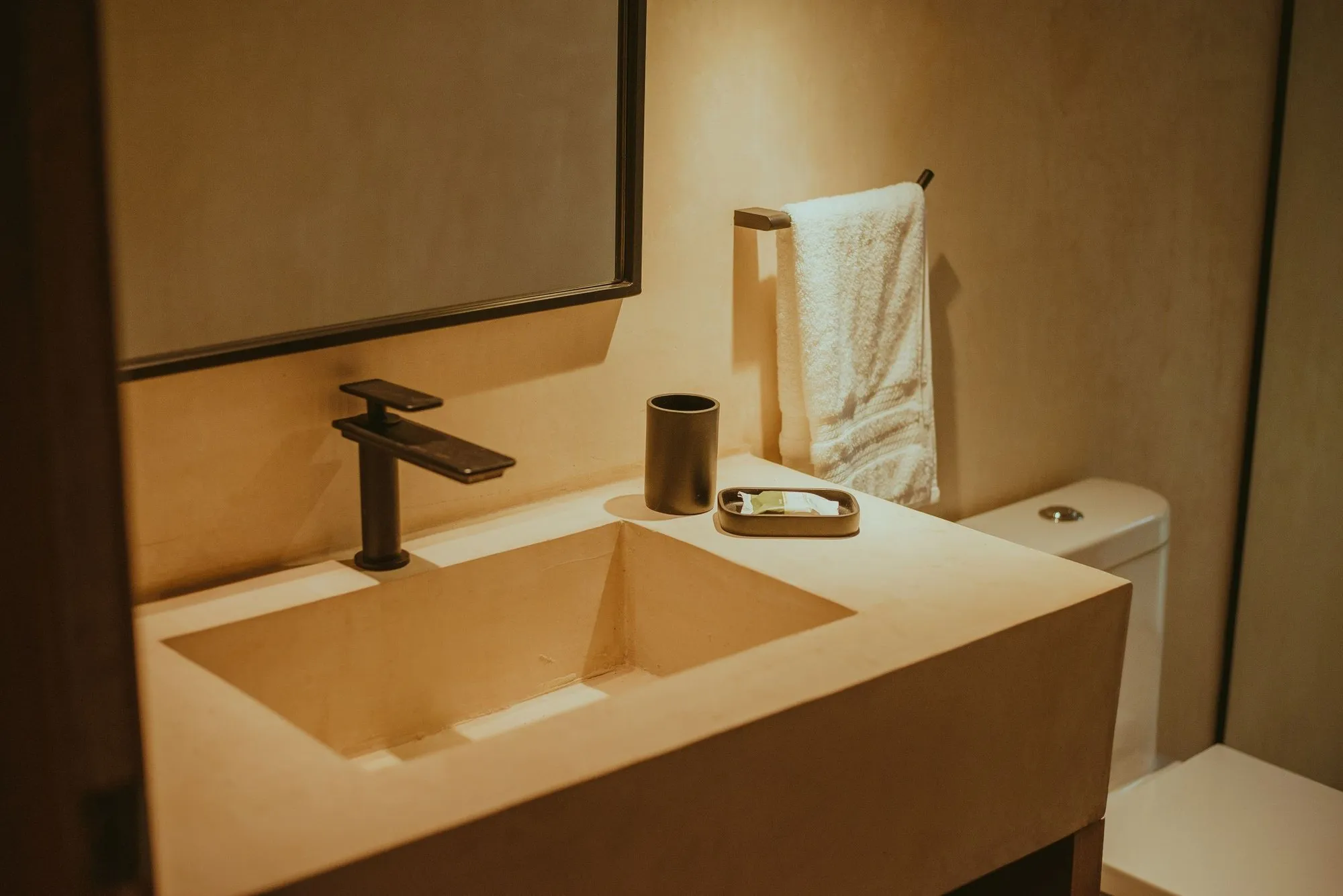
People ask, often on the first evening, why the walls feel the way they do: warm, a little uneven, matte in some places and burnished to a low shine in others. The answer is lime.
An old material, for a good reason
Lime plaster is what buildings were finished in for the two thousand years before cement. You slake quicklime into a putty, mix it with sand and a little marble dust, and trowel it onto the wall in thin coats. As it dries it takes carbon dioxide back out of the air and slowly turns to stone again. The wall you lean on is still setting years after it went up.
Near the sea that matters. Lime is breathable: it lets damp move through and out rather than trapping it behind a skin of modern paint, which is why the old coastal houses that kept their lime are the ones still standing straight.
Washed, or burnished
We finish the house two ways. Most walls are a lime wash, matte and chalky, tinted the rose of the sand it is made from. The bathrooms, and the whole of the bathhouse downstairs, are lime pressed and polished with a smooth stone while still damp, until it turns waterproof and takes a soft sheen.
You can tell them apart with your eyes closed. The wash is dry and cool; the burnished lime is smooth and holds the warmth of the room.
What it costs us, and what it saves
A burnished bathroom takes two plasterers about nine days. We re-wash the bedrooms every third winter, in January when the house is quietest, and it costs less than repainting would. There is no smell, no fumes, and nothing to peel.
It is the single thing guests write to us about most. If you would like to see how it is done, the plasterer who keeps the house runs a half-day workshop for residents in February; ask at reception.